
Retirement gives you something you probably did not have enough of during your working years, time. The problem is that time can either expand your life or quietly shrink it. I have seen both outcomes. The difference often comes down to two things, social connection and mental stimulation. Technology, when used intentionally, can help you stay social.
I know some retirees who treat their smartphone like a suspicious stranger. Others treat it like an oxygen tank. I fall somewhere in between. I see technology as a tool. It can isolate you if you use it passively. It can energize you if you use it with purpose. If you want to stay social in retirement and keep your brain active, your laptop, tablet, and phone can become powerful allies.
Let me show you how I use technology to stay connected, mentally sharp, and fully engaged in retirement.
Why Social Connection Matters for Healthy Aging
Before I get into apps and platforms, I want to talk about why this matters. Research from places like Harvard University has shown that strong social relationships are one of the most important predictors of long term health and happiness. In fact, the Harvard Study of Adult Development found that close relationships, more than wealth or fame, keep people happier and healthier as they age.
Social isolation increases the risk of depression, cognitive decline, and even heart disease. That is not opinion. That is data. If you live alone, moved away from family, or lost a spouse, the risk is even higher.
Technology can’t replace human contact. But it can bridge distance. It can open doors. It can help you create new connections when your old routines disappear.
Using Video Calls to Stay Close to Family
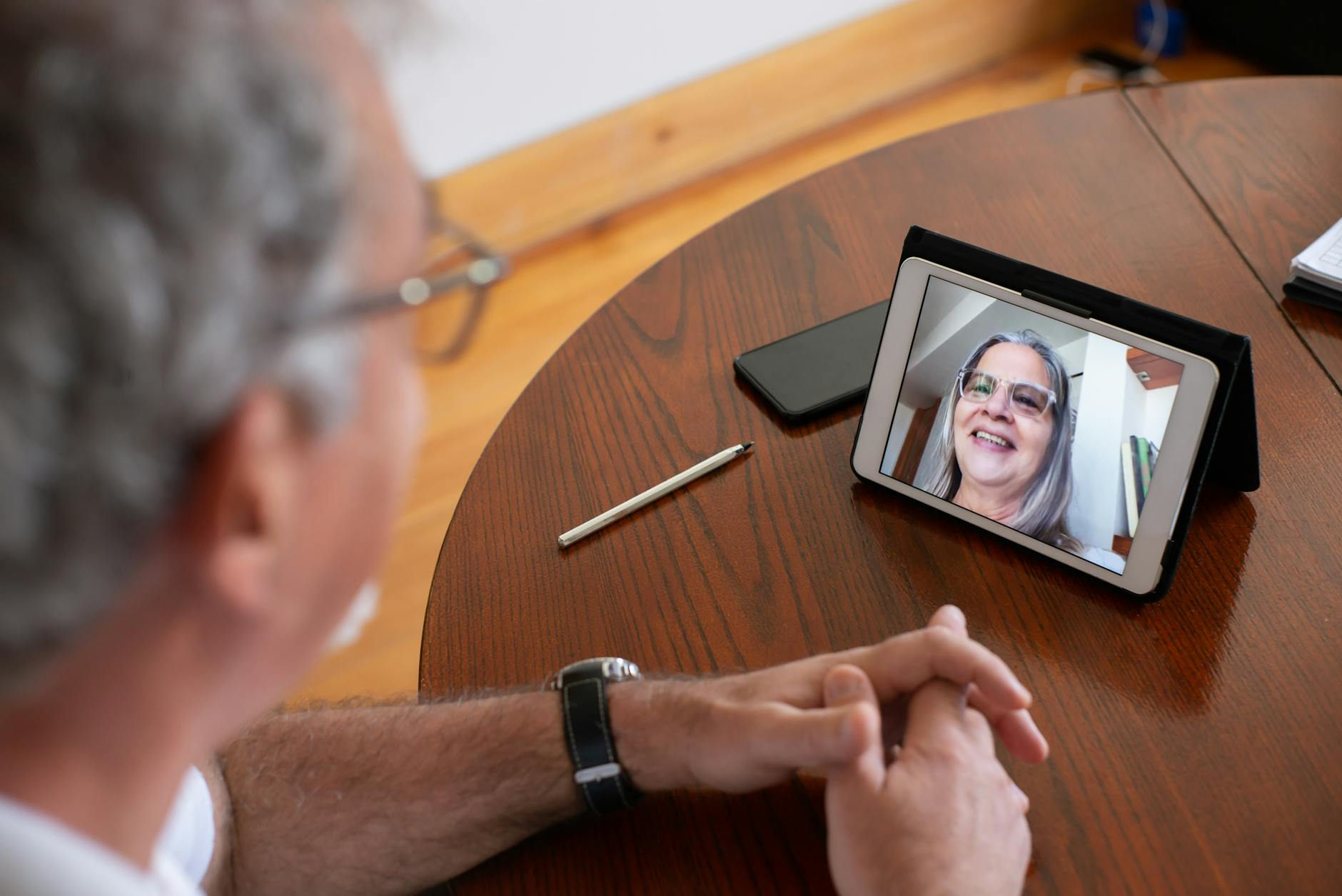
If you have grandchildren, you already know they grow at a shocking pace. Blink and they are taller than you. Video calling platforms like Zoom, FaceTime, and Skype make it possible to be part of their lives even if they live across the country.
I schedule weekly video calls with family. I treat them like appointments. I put them on my calendar. That small step increases the odds that it actually happens.
Here is how I make these calls more meaningful. I do not just ask, how was school. I read a book to my grandchild over video. I watch them show me a school project. I ask them to teach me something about their favorite game. When you engage actively, you build a shared experience.
If you are new to video calls, ask a family member to walk you through it once. Write down the steps. After two or three tries, it becomes second nature. The confidence boost alone is worth it.
Joining Online Communities for Shared Interests
Retirement can quietly erase your daily social structure. No more office chats. No more regular lunches with coworkers. You have to rebuild that network on purpose.
Online communities can help. Platforms like Facebook and Reddit host groups for almost every interest you can imagine, gardening, travel, investing, woodworking, classic cars, you name it.
I recommend choosing groups that encourage discussion, not just scrolling. Comment. Ask questions. Share your experiences. When you contribute, your brain works harder. You form connections. Over time, you recognize names. That sense of familiarity matters.
If you are interested in lifelong learning, you might explore online forums connected to universities or specific hobbies. You can discuss books, current events, or even retirement strategies. I have seen retirees form real friendships that eventually move from online chats to in person meetups.
Learning New Skills with Online Courses
One of the best ways to stay mentally active in retirement is to learn something new. Novelty challenges your brain. It builds cognitive reserve, which helps protect against decline.
Platforms like Coursera and MasterClass offer courses on everything from history to photography to finance. You can take classes taught by professors from top universities or experts in their field.
I once took a course on behavioral economics simply because I was curious. It forced me to think in new ways. I took notes. I paused lectures and rewound them. That mental stretching felt surprisingly energizing.
You do not need to pursue a degree. You need to pursue curiosity. Even one course per quarter can give your brain a steady workout.
Brain Training Apps and Cognitive Fitness
There is ongoing debate about how effective brain training apps are. Some research suggests that while they improve performance on specific tasks, they may not always transfer to general intelligence. That said, structured cognitive challenges still have value.
Apps like Lumosity and Elevate offer short daily exercises focused on memory, attention, and processing speed. I treat these like mental pushups. Ten minutes in the morning. Consistent effort.
More importantly, I mix digital brain games with real world challenges. I learn new technology features. I manage my own investments online. I write. I engage in debates. Passive scrolling does not count. Active thinking does.
If you want to stay mentally sharp in retirement, aim for activities that require focus, problem solving, and adaptation. Technology gives you easy access to those tools.
Virtual Volunteering and Purpose
One of the biggest psychological risks in retirement is loss of purpose. When you no longer have a job title, you can feel invisible. Technology can reconnect you with meaningful contribution.
Websites like VolunteerMatch list remote volunteer opportunities. You can mentor students, provide career advice, help nonprofits with bookkeeping, or assist with crisis hotlines, all from your home.
I have seen retirees tutor children online in reading. I have seen former executives mentor young entrepreneurs over video calls. When you use your skills to help someone else, you stay socially engaged and mentally challenged at the same time.
Purpose improves mental health. It reduces depression. It gives structure to your week. Technology makes it easier to find and fulfill that purpose.
Staying Physically and Socially Active with Fitness Technology
Physical health and mental health are linked. Regular exercise improves mood, memory, and cognitive function. Technology can support that too.
Wearable devices and fitness apps track steps, heart rate, and activity levels. Virtual fitness classes allow you to join live sessions from home. Some platforms even let you see other participants, which adds a social element.
I have joined live online yoga sessions where I recognized familiar names in the chat. That small interaction, a quick hello, a shared struggle with balance, builds connection.
If mobility is limited, online classes can be a lifeline. You can participate without commuting. You can maintain routine. Routine protects mental health.
Playing Strategy Games and Staying Competitive
I am a firm believer that competition keeps you sharp. Strategy games, chess, bridge, and even certain video games demand planning, memory, and adaptability.
Online chess platforms allow you to play against opponents worldwide. You can join clubs. You can review your games and learn from mistakes. That feedback loop strengthens your thinking.
Even word games or trivia apps can stimulate memory recall and vocabulary. The key is to choose games that challenge you slightly beyond your comfort zone. If it feels too easy, your brain coasts. If it feels slightly difficult, your brain grows.
Managing Finances Online as a Mental Exercise
Many retirees hand over financial management entirely to advisors. While professional guidance is valuable, staying engaged with your own finances can keep your analytical skills sharp.
Using online brokerage platforms, tracking investment performance, reading market analysis, and making informed decisions require attention and reasoning. If you follow companies like Vanguard or Fidelity Investments, you can access educational resources that explain market trends and retirement strategies.
Even if you do not trade frequently, reviewing your portfolio monthly keeps you involved. It forces you to interpret data. It builds confidence. It keeps your mind active.
Creating Instead of Consuming
Technology can turn you into a passive consumer. Endless scrolling. Endless videos. Hours disappear.
I prefer to create. I write blog posts. I record short videos. Some retirees start podcasts. Others publish family history projects. Platforms like YouTube allow you to share your knowledge with a global audience.
Creation requires planning, learning, editing, and communication. That is cognitive gold. It also opens doors to new relationships. Viewers comment. Conversations start. You feel heard.
You have decades of experience. Technology gives you a stage. Use it.
Protecting Your Mental Health Online
Let me add one important caution. Not all technology use is healthy. Doom scrolling through negative news increases anxiety. Online arguments can drain energy.
I set boundaries. I limit news consumption to specific times. I mute toxic threads. I focus on constructive interaction.
Digital literacy also matters. Learn to spot scams. Use strong passwords. Enable two factor authentication. Confidence with security reduces stress and prevents costly mistakes.
If you feel overwhelmed, step back. Technology should serve you. You should not serve it.
Building a Weekly Tech Routine for Social and Mental Fitness
Intentional structure makes a difference. Here is what a simple weekly framework might look like in practice.
One scheduled video call with family. One online class session. Three short brain training sessions. Two live virtual fitness classes. One active contribution in an online community. One creative project session.
You can adjust the mix based on your interests. The point is to use technology actively, not passively. When you design your week, you reduce the risk of drifting into isolation.
Final Thoughts on Using Technology in Retirement
Retirement is not an endpoint. It is a phase. You have more control over its quality than you might think.
Technology, when used wisely, helps you stay social in retirement. It keeps your brain engaged. It connects you to family. It gives you new skills. It provides purpose. It challenges your thinking.
I do not believe you need to master every new gadget. You need to stay curious. You need to keep learning. You need to reach out instead of withdrawing.
If you approach technology with intention, it becomes more than a screen. It becomes a bridge, a classroom, a gym, a volunteer center, and sometimes even a stage.
Your brain thrives on challenge. Your heart thrives on connection. Technology can support both, if you choose to use it that way.
Don’t wait until it’s too late, get your financial house in order today!
Happy retirement planning!
Leave a Reply